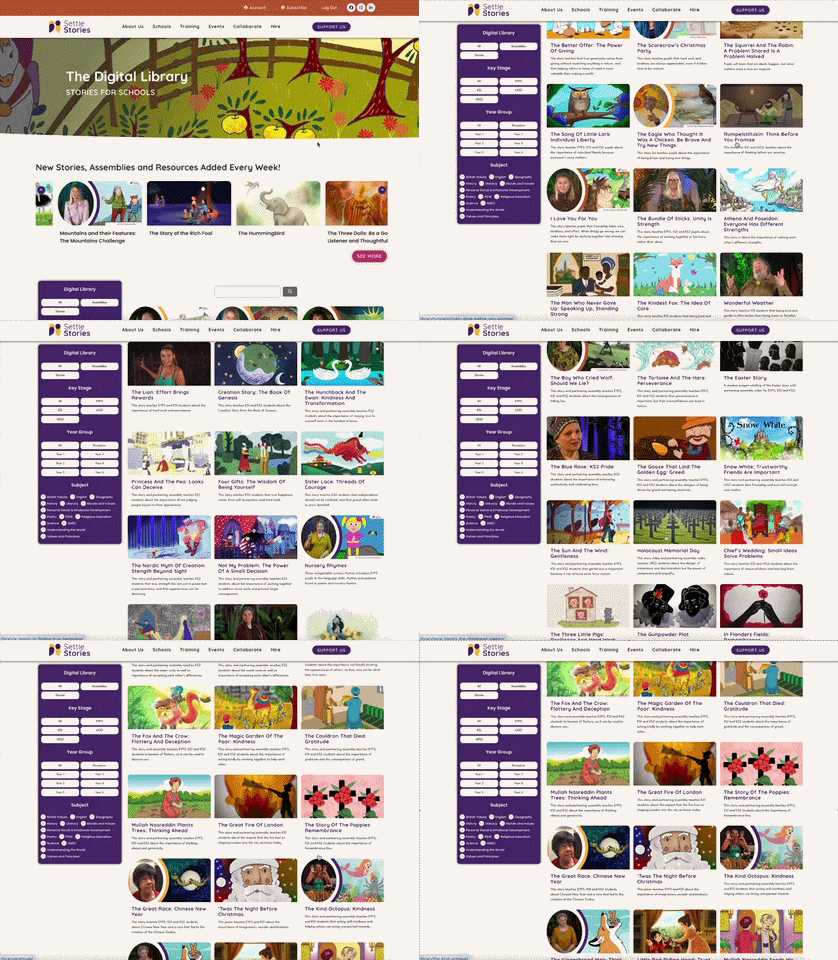

The storytellers and thinkers behind the work.
What drives us, and why it matters.
How it began, and how we got here.
The change our stories make.
Where story becomes action.
Six continents. Forty-four countries.
The W.R. Mitchell Archive and more.
Fund, sponsor or partner with us.
What to expect, and how we can help.
Donate or give in memory.
Media kit, photography and biography.
Over 200 video resources for teachers.
Browse by key stage and theme.
Information and More…
Thirty days. No card needed.
Stories for Emotional Wellbeing.
Live storytelling in your classroom.
Practical training for educators.
A free weekly story for primary schools.
The book for teachers and leaders.
Enter by the closing date.
Storytelling for organisations.
Build skills you can use tomorrow.
Stories to share at home.
Develop your craft and voice.
View our growing directory.
Turn creativity into practice.
Craft Your Story In Six Weeks
Hands-on learning for real impact.
Stories to share with your children.
Upcoming events and live stories.
Watch past events on demand.
Stories you can drop into anytime. (24/7 access)
Getting here, and what to expect.
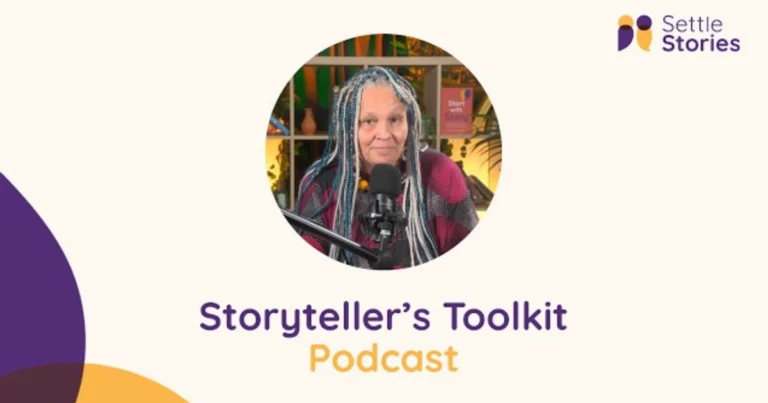
The podcast, on YouTube.
Subscribe to the channel.
Apple, Spotify and more.
Tell your story on the show.
Seventeen parts. Free to listen.
Sixteen parts. Free to listen.
Twenty-four parts. Free to listen.
Ten parts. Free to listen.
Find artists. Share your work.
Open calls, commissions and roles.
Meet people. Spark ideas.
Write together. Grow together.
Give time. Gain plenty.
A flexible home for story.
Availability, pricing and details.
Record your story professionally.
From idea to finished film.
Share events beyond the room.
We bring the kit to you.
Start with Story is the practical guide from Settle Stories that shows you how to make learning stick across every subject — no performance required, no extra prep.
pupils reached across the UK
National Curriculum aligned
funded & accredited charity
featured & recommended
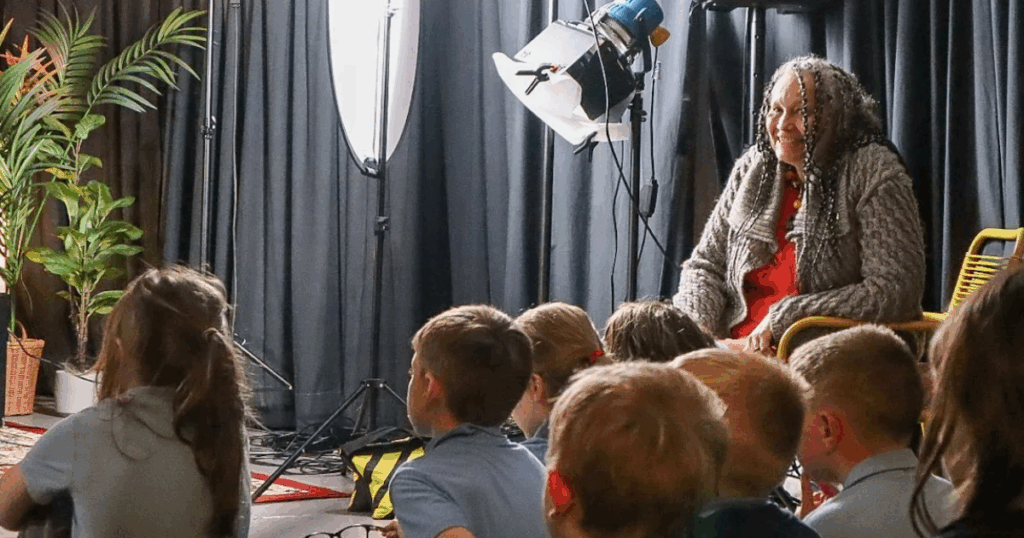
You’ve tried the prompts. You’ve tried the word banks. And yet, there are still children staring at a blank page with nothing to say and no idea where to start.
Oral storytelling builds vocabulary, sentence structures and narrative confidence – carrying directly into writing at every stage from EYFS through KS2.
Practical examples across Science, Maths, History, RE and Geography show exactly how the framework translates into your day.
Storytelling unlocks EAL learners, reluctant readers and pupils who come alive when they’re talking rather than writing.
Through the safety of a story, pupils explore complex emotions, develop empathy and build emotional literacy that lasts beyond the classroom.
Working this way makes me wish I could go back into the classroom just to do it all over again.
Jean Gross CBE - Foreword, Start with Story
SB
Performance storyteller and founder of Settle Stories. Creator of the Stories for Schools digital library – blending traditional myths and new technology to nourish every child’s engagement and emotional wellbeing.
ET
Former primary teacher and school governor. Emma manages the Stories for Schools digital library and wellbeing programme – using storytelling and mindfulness to build pupil resilience.
Yes, because it's built around what you already do. This isn't a new approach to bolt on. It's a lens that makes your existing planning richer. Teachers across EYFS, KS1 and KS2 are using it every day in schools just like yours.
The five-minute planner is genuinely five minutes. You're not redesigning your lessons, you're adding a 30-second opening that changes the whole room. Most teachers say they spend less time explaining once they start, because the story does the context-building for them.
You don't need to. The most powerful moments in a story-led lesson aren't theatrical - they're a lowered voice, a three-second pause, a single well-chosen word. If you can tell a child why something matters, you can do this
Not at all. The Teach Primary article showed how this works across Science, Maths, History, RE and Geography. If there's a concept to teach, there's a story that can carry it.
No spam. No card needed. Unsubscribe any time.